Car Crash Royale
- 3.2
- Rating
- 10.00M
- Installs
- Free
- Price
 Analysis by App-foxy
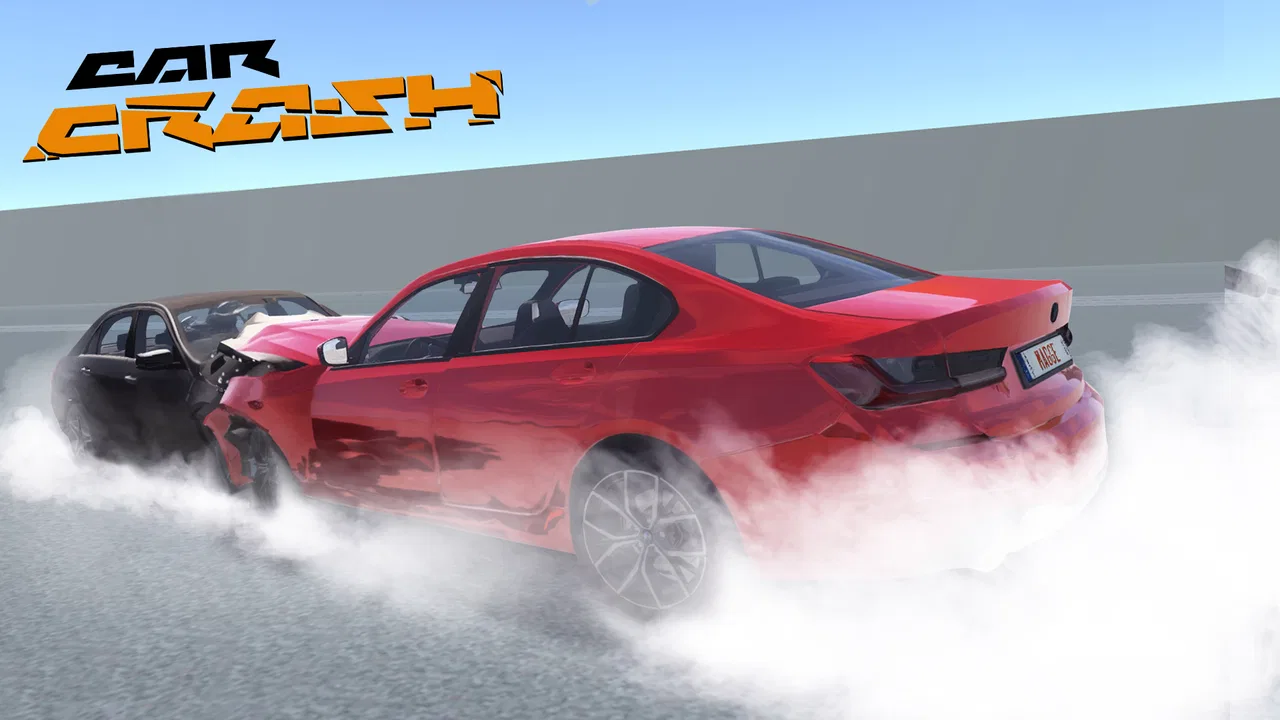
I approached Car Crash Royale as a quick-play racing game rather than a traditional competition racer. Its main appeal is the physical drama of damaged vehicles: instead of concentrating only on clean laps and perfect overtakes, I found myself watching how each collision changed the shape and movement of the car. That focus makes it easy to understand within a few minutes, but it also means the game will not satisfy everyone who arrives looking for a deep motorsport simulation.
The game comes from Studio WW Games and is free to install, with optional purchases ranging from $0.49 to $4.99 per item. It is rated for Everyone, which makes it approachable for a broad audience, although the crash-focused presentation may appeal more to players who enjoy mechanical destruction than to younger children looking for a simple cartoon racer. It has passed the ten-million-install mark, while its average rating sits at 3.2 from around thirteen thousand ratings. I read that combination as a useful warning: plenty of people are curious enough to try it, but the experience has clear limits that are worth understanding before you commit time to it.
What kind of racing experience are you choosing?
The first decision is whether you want speed, competition, or impact. Many racing games are built around finishing first. Their most satisfying moments come from taking a corner efficiently, choosing the right racing line, or managing a vehicle over a long event. This game puts a different question in front of me: what happens when the car hits something, and how entertaining is the resulting wreck?
You May Also Like

 Blood Strike: 2.5 Anniversary
Blood Strike’s Loadouts Turn Every Drop Into a Tactical Gamble
A close look at Blood Strike’s custom loadouts: how fast access to signature weapons reshapes its battle royale rhythm, rewards preparation, and narrows the gap between fights.

 Pandora - Music & Podcasts
Pandora’s Music Is Easy to Start, but Harder to Recover
Pandora’s strength is its low-effort path from a seed to a station. Its weak spot is how much confidence it asks you to place in connection, setup, and quiet recovery.

 8 Ball Pool
 Is Built on Rivalries, Rematches, and Routine
A close look at the rivalries, rematches, shared routines, and unanswered safety questions that turn a quick pool match into a persistent mobile community.

 Samsung Music
’s Quiet Strength Is Playing What You Already Own
Its reach comes less from spectacle than from dependable access to a personal library. That simplicity is both the app’s strongest retention engine and its ceiling.

 AccuWeather: Weather Radar
AccuWeather Review: A Quick, Clear Forecast for Everyday Decisions
For everyday plans, the best forecast is the one you can understand quickly. AccuWeather makes rain timing, radar, and local conditions easy to act on, with a few trade-offs.

 Hill Climb Racing
Why Hill Climb Racing Still Turns Crashes Into One More Run
A tiny car, a bumpy hill and one more upgrade: Hill Climb Racing keeps resurfacing because its simple chaos makes every near-miss feel personal.
More From Our News Desk



That distinction matters because the destruction is not just a side effect of racing. It is the reason to keep playing. I found the most enjoyable sessions came when I stopped treating every crash as a mistake and started treating collisions as part of the objective. A careful driver may still get through a section faster, but a reckless run can be more memorable when the car arrives at the end visibly battered.
For a decision guide, I would judge the game using four practical criteria. First, does the driving feel understandable without a long tutorial? Second, does the damage model make repeated attempts interesting rather than merely decorative? Third, is the short-session entertainment strong enough to balance the lack of a more conventional racing structure? Finally, can you enjoy it without feeling pushed toward optional spending?
On the first point, it is inviting. I could pick it up for a brief session and immediately understand the basic pleasure. The controls and objectives do not require the same patience as a serious racing simulator. That makes it suitable for a spare moment when I want something interactive but do not want to learn a large progression system.
The second point is more personal. If you enjoy seeing vehicles bend, break, and lose their pristine appearance, the central idea has staying power. If you need every race to offer a new strategic layer, the novelty can wear thinner. The game’s core loop is direct, so your enjoyment depends heavily on how much satisfaction you get from experimenting with impacts.
Why the destruction changes the way I play
In a normal racer, I instinctively avoid contact because it costs time. Here, I began testing the boundary between a useful hit and a pointless one. A collision can alter the vehicle’s movement, so rushing into every obstacle is not automatically smart. The better approach is to use early attempts as information-gathering runs: notice which approaches leave the car controllable, then repeat the safer route when the goal is completion rather than spectacle.
That creates a small but meaningful trade-off. A dramatic crash may look satisfying, yet it can also end a run before I have seen what the rest of the course offers. I recommend treating the first few attempts as reconnaissance. Learn the layout, identify where the car loses control, and only then decide whether you want a clean finish or a deliberately destructive experiment.
A second useful habit is to avoid judging a run only by its opening seconds. The vehicle may still move after taking visible damage, and the altered handling can become part of the challenge. Instead of restarting immediately, I sometimes continued with a damaged car to see whether the remaining section could be completed. That gave the game more value than simply repeating perfect starts, because it turned recovery into its own small test.
The third insight is that the game works best when I set a personal objective before starting. “Finish without a major hit,” “take the risky route,” and “see how long the damaged car remains usable” are very different challenges, even when the basic controls stay the same. Without that self-imposed target, a session can feel repetitive. With one, the destruction becomes a tool for experimentation rather than a single visual effect.
Where it wins against ordinary racers
Its strongest advantage is immediacy. I do not need to care about a championship table or memorize a complicated vehicle setup to enjoy the first run. The game communicates its identity quickly: drive, collide, observe the consequences, and try again. That makes it a good choice for players who like the physical reactions of racing games but do not necessarily want a long career mode.
It also suits people who enjoy sharing the moment informally. A spectacular wreck is easier to appreciate at a glance than a technically excellent corner. If I hand the phone to a friend, the appeal is understandable almost immediately. There is no need to explain a large backstory or a complicated set of rules before the other person can see what makes the game different.
The realistic destruction theme gives it a more tactile identity than a standard arcade racer. I would not confuse that with a complete simulation, but the emphasis on damaged cars changes the emotional rhythm. Winning is not always the only satisfying outcome; sometimes surviving a chaotic section or producing an especially dramatic impact is enough to make a short session worthwhile.
That is also why the game can work well after a long day. I can play for a few minutes, focus on one attempt, and stop without feeling that I abandoned a major story mission. The low commitment is a genuine strength for casual players, commuters, or anyone who prefers games that deliver their main idea quickly.
Where a different racing game may fit better
I would not choose this as my first recommendation for someone who wants licensed competition, detailed tuning, long events, or a strong sense of progression. A conventional arcade racer is likely a better match if the main pleasure comes from unlocking vehicles, improving lap times, and comparing clean results. A simulation-focused game is more appropriate if realistic cornering, braking, and setup decisions matter more to you than visible damage.
It may also be the wrong choice for a player who dislikes repetition. Because the central attraction is the crash itself, the experience naturally asks you to revisit similar situations and look for a more entertaining or more successful result. If you need a wide variety of objectives, a story campaign, or frequent changes in scenery, another racing category will probably offer more long-term structure.
The average rating of 3.2 is relevant here, not because it decides the game’s quality by itself, but because it reflects a divided audience. I can understand the split. The concept is clear and entertaining when it matches your taste, yet the same narrow focus can feel limited when you expected a full racing package. The large install count shows that the idea has broad curiosity, but curiosity and lasting satisfaction are not identical.
There is also a difference between realistic-looking destruction and realistic driving. The former is the game’s selling point; the latter should not be assumed simply because the crashes are emphasized. Players who want authentic motorsport behavior should compare it with dedicated simulation alternatives rather than using this as a substitute. I see it as a destruction playground with racing controls, not as a complete digital replacement for track driving.
How to decide whether the free version is enough
Since the game is free, the sensible approach is to test the basic loop before considering any purchase. I would spend several short sessions checking three things: whether the controls feel comfortable, whether the crash reactions remain interesting after the first novelty, and whether I naturally create new goals for myself. If those answers are positive, optional spending becomes a personal choice rather than a requirement for discovering the game.
The in-app items cost between $0.49 and $4.99 each. I would treat that range as a reason to set a limit before browsing the purchase options, especially if the game is being used on a shared device. A low individual price can still become meaningful when several small purchases accumulate. The best value comes from enjoying the free experience first and only paying for something that directly improves the way you already play.
One practical use case is a short evening break. I might have ten minutes before dinner, start a run, deliberately try a risky collision, and stop after one successful recovery. In that situation, the game’s compact premise is more useful than a large racing title that expects a longer commitment. Another use case is casual play with a friend, where comparing the most controlled or most spectacular attempt can create a simple challenge without requiring a formal multiplayer structure.
For a younger player, the Everyone rating makes the game broadly accessible from an age-label perspective. I would still explain that the focus is on car destruction, because “racing” can suggest a gentler lap-based experience. Adults choosing a game for a child should also keep the optional purchase range in mind and decide whether purchase controls are needed on the device.
Players using an older phone should pay attention to the operating-system requirement: the game needs Android 7.0 or later. That is not a demanding threshold by modern standards, but it is worth checking before troubleshooting installation. On supported devices, I would close unnecessary apps before a longer session if the phone feels warm or performance becomes inconsistent; destruction-heavy scenes are usually more enjoyable when the action remains readable.
The cost of changing to an alternative
Switching to a standard arcade racer gives you a different kind of value, but it also changes what you must learn and what you lose. You may gain clearer progression, more conventional competition, and a stronger reason to chase clean times. In return, you give up the immediate focus on wrecks that makes this game distinctive. If your favorite moments here come from watching a damaged car struggle onward, a polished lap racer may feel technically richer but emotionally less interesting.
Moving to a simulation game has an even higher learning cost. You may need to understand braking points, vehicle balance, track positioning, and other details that are rewarding only if you want that depth. I would make that switch when I feel frustrated by the simplicity of the destruction loop, not merely because another game has more menus or more serious presentation.
There is no need to choose one category permanently. I see this game as a useful companion to a conventional racer. Use a serious racing title when you want improvement and competition; use this one when you want a quick experiment with impact and recovery. The two experiences serve different moods, so replacing one with the other is not always an upgrade.
Version 3.9.3 is the current version, and that is the version I would look for when checking compatibility and deciding whether to begin. The important expectation is still the same: this is a focused game from Studio WW Games, not a broad racing collection. Going in with that understanding prevents the most common disappointment—expecting a full motorsport career from a game built around crashes.
My recommendation for different players
I recommend trying it if you enjoy vehicle destruction, quick experiments, and the satisfaction of turning a failed-looking run into a survivable one. It is especially suitable for casual players who want an easy-to-grasp racing game and for people who find spectacular impacts more entertaining than perfect lap times. The free entry point makes that trial straightforward, provided you keep optional purchases under control.
I would skip it if your priority is deep car tuning, authentic competitive racing, a substantial story, or constant variety. You may also want another option if repeated crash scenarios stop feeling fresh quickly. In that case, a conventional arcade racer will probably give you a stronger long-term structure, while a simulation will better reward careful driving and technical improvement.
My own recommendation is conditional but positive: install it for the destruction-focused experience, not for promises it was never designed to fulfill. Give the first sessions a clear purpose, alternate safe and reckless approaches, and continue damaged runs instead of restarting automatically. Those small changes reveal more of the game than simply crashing as hard as possible every time.
After trying it, I would keep it on my device as a short-session option rather than make it my only racing game. Its best quality is the directness of its idea, and its main weakness is the same narrow focus. If you want a quick car-crash playground with enough control to experiment, it is worth a free trial; if you want a complete racing career, choose a different category.
FAQs for Car Crash Royale
01What is Car Crash Royale, and how does the gameplay work?
Car Crash Royale is an action-driving game focused on chaotic vehicle battles, destruction, and survival. After choosing a car, you enter compact arenas where the objective is generally to crash into opponents, avoid hazards, collect useful items, and remain competitive until the match ends. The controls are designed for mobile play, so matches are quick to learn, although mastering steering, timing, and positioning takes practice.
02Is Car Crash Royale free to download and play?
Car Crash Royale can generally be downloaded without an upfront purchase, but players should check the current store listing for the exact pricing and availability in their region. Like many free mobile games, it may include optional in-app purchases for vehicles, upgrades, cosmetics, currency, or other advantages. Parents should review purchase settings, especially if children will be playing on a shared Android or iOS device.
03Does Car Crash Royale require an internet connection?
The connection requirements may depend on the specific game mode and the version installed from the app store. Online features, competitive matches, leaderboards, advertisements, cloud progress, or multiplayer functions normally require a stable internet connection. Some parts of the game may work offline, but users should not assume that every mode is available without connectivity. Checking the developer’s latest store description is recommended before downloading.
04Is Car Crash Royale suitable for children?
Car Crash Royale is built around cartoon-style vehicle collisions and competitive destruction rather than realistic driving simulation. Even so, the game may contain advertising, optional purchases, online interactions, or content that parents may want to supervise. Its suitability depends on the child’s age, the platform’s rating, and how comfortable parents are with arcade crashes and competitive gameplay. Using parental controls is advisable for younger players.
05What devices are compatible with Car Crash Royale, and how much storage is needed?
Compatibility can change as the developer releases updates, so the safest approach is to read the current requirements on the official Google Play or Apple App Store page. In general, the game needs a supported Android or iOS version, sufficient free storage for the installation and updates, and hardware capable of rendering its 3D arenas smoothly. Older phones may experience slower performance, longer loading times, or reduced visual quality.
Pros
- Simple controls make it easy to start playing immediately.
- Short matches are well suited to quick gaming sessions.
- Vehicle variety gives players different driving styles to try.
- Crash-focused gameplay delivers satisfying visual impact.
- Progression encourages regular play and experimentation.
Cons
- Frequent crashes can become repetitive after extended sessions.
- Some vehicles or upgrades may require substantial grinding.
- Touch controls can feel imprecise during hectic collisions.
- Visual effects may reduce clarity when many cars collide.
- Online competition may be frustrating against more experienced players.

Car Crash Royale
Gallery